Author: Technical

  • Striving to reduce plastic waste as an adhesive manufacturer

    We’ve all seen the devastating images of beaches covered with rubbish, not an inch of sand or sea visible. A spotlight is being shone on waste, particularly plastic waste, and its effect on the environment. Here at Structural Adhesives Ltd we are actively researching ways in which we can reduce our plastic waste.

    We have focused on considering how our adhesives are packaged in the future. It is common practice for adhesives and sealants to be packed in cartridges or buckets which are generally made of plastic. Suitable alternatives to plastic are not easy to come by for products such as ours. Any packaging we use must be impervious to the chemicals in our products, which narrows down the choices significantly. Furthermore, as many of our products are liquid, materials such as fibre-based packaging are not suitable. Some of our adhesives are already packaged in tin or steel pails, and switching over to packaging more adhesives in this way is a possibility. However, it is heavily debated whether they would be any better for the environment than plastic buckets. For example, plastic is much lighter than metal and leads to better fuel economy. Although there is no obvious replacement at present, research and development is being carried out all over the world to find more alternatives to plastic so I’m keeping my ear to the ground.

    If we were to continue using plastic packaging there are still ways to reduce the impact of said packaging on the environment. One such way of doing this is using plastic packaging that is produced from recycled material. As part of the chemical industry the packaging we use must meet certain standards. A quick internet search for adhesive cartridges made from recycled plastic resulted in no relevant hits but this doesn’t mean we’ll give up. Using plastic packaging that can be easily recycled at the end of its use is another option we are investigating for decreasing plastic waste. At present the UK only recycles approximately 30% of its plastic waste. The primary challenge for recycling in the UK is sorting plastic by type so that it can be recycled effectively which can be a costly process. The colour of plastic often presents an issue for recycling as well because machines at some recycling plants cannot recognise black or dark items. Thankfully solutions are immerging for these problems and the rate of plastic recycling in the UK is set to increase in the near future.

    Recycling of plastic doesn’t necessarily have to mean producing new plastic products from the old ones, plastic can be converted into oil. If the same oil could then be converted into materials to produce our adhesives, we would really be on to something. A truly circular economy.  
  • Focus feature

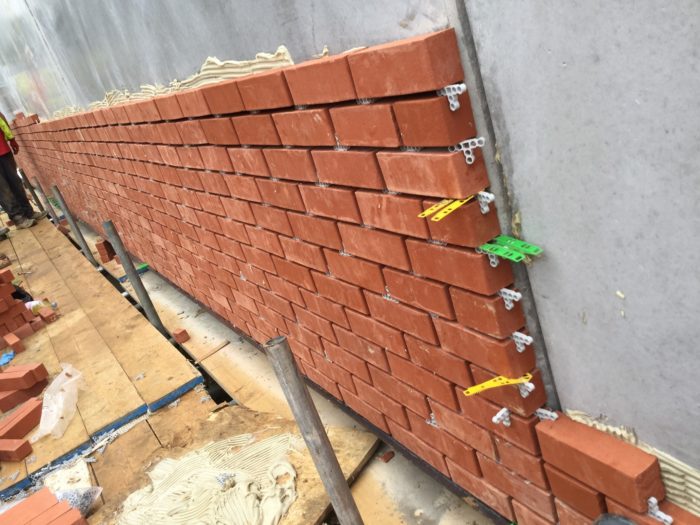
    Structural Adhesives current biggest seller is S-2625E! In the last month half of all enquiries at Structural Adhesives have involved bonding brick slips to a variety of substrates including existing brickwork, steel and concrete. S-2625E is offered for these applications and can also be used to bond brick slips to plywood, aluminium and exposed aggregate to form a durable, freeze/thaw resistant bond. S-2625E is a two-part epoxy adhesive with a 1:1 mix ratio, is easy to use and cures rapidly, enabling work to be moved after 4 hours. Recently S-2625E has been recommended for use in a wide variety of projects such as restoration of historic buildings and construction of doorways and archways, brick slip effect balconies and even bridges-see photo below.

  • Building for a future in construction

    The United Kingdom is currently experiencing a period of great change. From Brexit to the fourth industrial revolution, businesses of all kinds are in the process of adapting for the future. Construction is facing a monumental change that may be little known to those outside the industry. In the wake of the Grenfell tower fire the government has introduced building regulations to ban the use of combustible materials above 18 m. This ban affects new high-rise buildings such as flats. Some organisations and individuals are calling for the ban to be extended further to cover buildings that are not high rise. It is possible the affect of the new regulations will be even wider reaching than first anticipated. As Assistant Chemist at Structural Adhesives Ltd I have been keeping a close eye on advancements in the governments fire safety inquiries since long before the ban was announced. I alongside the Senior Chemist have attended a number of lectures on the new construction fire regulations and what this will mean for the industry. Many construction companies that supply materials, for instance cladding or insulation, to projects such as these are now unable to do so without making substantial changes to their products. Corporations are pooling time and money into developing new materials that are able to pass the stringent fire tests to gain A1 or A2-s1d0 fire ratings and be classified as non-combustible or of limited combustibility. Not only must construction companies assess the combustibility of their products they must also evaluate how they designed to be are fixed in or onto buildings. 

    The research and development team at Structural Adhesives Ltd are working tirelessly to develop A1 and A2-s1d0 rated adhesives that can be used for bonding substrates in buildings above 18 m. The vast majority of adhesives inherently contain a high level of carbon which is combustible but is also heavily involved in the bonding mechanism. 30 years’ experience at Structural Adhesives Ltd is being used alongside knowledge from degree level qualifications in chemistry to develop innovative technologies that overcome the challenge of drastically reducing the combustibility, whilst still maintaining the adhesives ability to form a durable bond. As well as being of limited combustibility any adhesives used on the exterior of high-rise buildings must be equipped to tolerate harsh weather conditions such as frost, rain, high winds and UV light. Part of the A1/A2 adhesive development process at Structural Adhesives Ltd includes rigorous testing of potential products against factors such as these, giving customers peace of mind. Structural Adhesives Ltd are also striving to ensure that the A1/A2 adhesives developed look, feel and behave similarly to those currently being used for such applications, with the aim to provide a welcome sense of continuity to the industry.

    The availability of an A1 or A2 adhesive would be a breath of fresh air for architects giving greater flexibility of design for high-rise buildings. Designers would benefit from the advantages of an adhesive, such as aesthetics and bonding dissimilar substrates, whilst being assured of fire safety and regulatory compliance.

    Next post in this series

  • Will modular housing be the next big thing for the glue industry?

    Working in research and development at Structural Adhesives Ltd involves examining trends and innovation in each of the industries we supply. The purpose of this is to identify new areas where adhesives can be beneficial or areas where there is demand for new adhesives with particular properties. Part of exploring new trends is internet research and reading papers and articles. However, often the most useful information comes from talking to people in the industry. My colleagues and I have attended trade shows such as UK Construction Week and Advanced engineering (both held at the NEC, Birmingham) to meet others in the industries and find out what they are working on. As well as meeting many interesting people I came back to the office with a much clearer picture of where these industries will be in the coming years and how they will get there.

    One particular trend that has captured my attention, and the attention of many others, is modular housing. Modular houses are built in factories and then transported to site. It is estimated that the build time of a modular house is less half that of a traditional home. As modular houses are typically built indoors in a factory, builders don’t experience delays due to weather which often occur with traditional builds. Furthermore, the quality of modular homes can be more tightly controlled than traditional homes due to the majority of construction taking place in a factory. There are even some claims that modular homes are more energy efficient due to the tighter control when building. Due to the reduction in build time and subsequent lower labour costs per home, modular houses are likely to be significantly cheaper than traditional homes. Could modular housing be the answer to the 300,000 homes a year that need to be built to end the UK’s housing crisis? 

    With the production of modular homes taking off, the construction supply chain (adhesives included) are likely to see some changes in terms of materials required and their properties. Structural Adhesives Ltd are always looking for ways to support the building industry in finding bonding solutions for emerging construction methods.  

  • Adhesives for vehicles of the future

    With vehicle emissions becoming increasingly scrutinised manufacturers are searching for new, innovative ways to reduce them. Lightweight substrates are quickly becoming the norm but often present challenges not seen in the past. Joining dissimilar materials is no mean feat but can be accomplished with the use of adhesives. When temperature fluctuates dissimilar materials expand and contract at different rates. Adhesives are typically better able to cope with these differences than mechanical fastenings. Additionally, the need for heavy rivets and bolts is reduced when adhesives are used and this decreases the overall weight of the vehicle even further. Adhesives also provide superior performance than mechanical fixings as the stress is spread over a larger area and therefore fatigue and failure are less likely to occur. For efficient production manufacturers often require an adhesive with a rapid cure time such as S-585/85A.

    The most thorough way of reducing emissions is to switch to electric cars, the popularity of which is escalating at an alarming rate. Electric car batteries are complex and are made up of many cells which are joined together to form modules. The modules are encased in composite or aluminium and fixed in a durable cage to provide protection during a crash. Thermally conductive adhesives are used in electric car batteries to maintain constant temperature and prevent thermal runaways. An example of a thermally conductive adhesive is S-205E.

     Its well-known that electric vehicles are significantly quieter than those with conventional combustion engines. Previously unnoticed vibration noises that were masked by the engine are now becoming an irritation to customers. Adhesives and sealants such as S-1008E, can also be used to provide a sound damping effect and improve customer satisfaction.

  • The role of adhesives in the fight against climate change

    Unless you’ve been living under a rock you will have heard that we only have a few years to stop the temperature of Earth rising by more than 1.5 degrees Celcius. Barely a day goes by where climate change is not discussed in the news. The topic is fraught with politics and the differing opinions of influential figures, sometimes it is easy to get caught up in the debate and forget to take action. Slowing down climate change successfully will take the collaboration of entire communities and the adhesives and sealants industry is no exception.

    Renewable energy is one aspect of the fight against climate change and will become even more heavily relied upon as fossil fuels begin to run out. Adhesives and sealants are critical for many applications in the renewable energy sector and without them slowing down climate change would be near impossible.

    Solar panels require adhesives in both the assembly and mounting of the photovoltaics modules. Products are used for encapsulation of the crystalline silicon photovoltaic cell and have very good thermal resistance and low moisture uptake. An adhesive is also used for bonding the substrate, photovoltaic cell and back sheet together. This adhesive must have low moisture vapour transmission, good heat and chemical resistance, high bond strength and good optical clarity. Furthermore, adhesives are often used to mount the modules onto racks and the racks onto roofs or more commonly to bond the panels directly to roofs to eliminate the heavy racks.

    Wind turbines typically consist of three sections, the tower, the blades and hub and the section in which the equipment is held, known as the nacelle. All of these sections require adhesives and sealants, however, the vast majority are used for the blades. These adhesives must have very high shear and peel strengths and good heat resistance to enable to blades to withstand harsh winds. Wind turbine towers are usually made of steel but concrete towers are becoming more common. Concrete towers are made of segments stacked on-top of each other and in-between each segment is 2-part epoxy resin. Sealants are typically used for the nacelle cover and anaerobic threadlockers are also used in the nacelle.

    Next post in this series

  • Natural Adhesives

    Look close enough and it becomes apparent that adhesives have been used since long before mankind took to epoxy or cyanoacrylate. Artefacts such as axes fixed with adhesives have been discovered dating back 200,000 years. Prehistoric glues included birch-bark tar, pine pitch and animal-based hide glue. It is clear early humans looked to the forests, grasslands and oceans around them for suitable means to fix materials together. In a world in dire need of more bio-renewable resources it’s important for the development chemists of today to imitate our ancestors and use nature for ideas.

    Humans are by no means the only life to utilise adhesives. A surprising source of powerful adhesives is bacteria. One species in particular, the Caulobacter crescentus, produces a sugary substance that can tolerate forces of up to 5 tonnes per square inch, a great deal higher than commercial adhesives. If this adhesive could be mimicked the impact would surely be momentous.

    Another amazing feat of adhesion can be witnessed on coastlines all around the world. Molluscs and other crustaceans manage to cling to rocks indefinitely despite being perpetually battered by the ocean. The secret to the molluscs sticking power are unique proteins. A scientist at Oregon state university used what he had learnt about the adhesion of molluscs and has conducted research into modifying soybeans to produce a renewable bio-based adhesive.

    It is unclear where the inspiration for the next generation of adhesives will arise but one thing is certain, mother nature holds solutions and provides countless models just waiting to be mastered.

  • Structural Adhesives road to A1 and A2 ratings

    If you were to ask any professional in the construction industry their number one concern at the moment they would undoubtedly say combustibility of materials. After the tragic events of Grenfell tower the general public have (rightly so) been questioning the fire safety of buildings they live and work in. Pressure is building on manufacturers to supply materials that are lower risk in terms of fire safety. An announcement from the government calling a ban on combustible materials on buildings over 18 m has made the issue all the more urgent. As assistant chemist at Structural Adhesives Ltd this issue has lately been taking up a lot of space in my mind.

    The guidelines to fire safety of materials are by no means straight forward. Words such as combustibility, flammability, fire-resistant and fire-retardant all have different meanings but are often used interchangeably by corporations making it difficult to determine what is required. My initial investigations into fire rating regulations unearthed a number of different classification systems (each with their own criteria) which left my head spinning, and I can’t be the only one.

    Thankfully to ease some of the confusion the government have specifically mentioned one the of systems, the Euroclass system. It has been stated that only materials classified as A1 and A2 in this system will be permitted for use above 18 m. A1 and A2 ratings correspond to non-combustible materials and materials of limited combustibility respectively. But are these materials available to buy? The answer is yes, to an extent. For example, there are cladding and brick slip systems available that are A1/A2 rated but how are these designed to be fixed to the building? If the answer is an adhesive then is this adhesive also A1/A2 rated? Adhesives usually used for these applications contain large amounts of carbon and are by no means non-combustible.

    A truly non-combustible adhesive designed for bonding cladding, now that’s something worth thinking about.

    ?