Scope: Creating
feature walls/ceilings in the rock royalty lounge of the new Hardrock Hotel in
Marble Arch (formally the Cumberland hotel).
Adhesive requirements:
To enable the bonding of mirror to plywood, Structural Adhesives Ltd
recommended the MS polymer product S-732U VHG which was approved by the
contractor.
The research
and development team have been busy in the lab this week working on a solution
to a common problem for single part, heat cure epoxy adhesives. Many single
part epoxies have good sag resistance when applied but spread as they cure
because the viscosity decreases due to the high temperatures. Structural
Adhesives Ltd have been developing a formulation that remains sag-resistant
whilst curing which enables the adhesive to be used for applications such as
joint sealing which is not possible for many single part epoxies.
If you have requirement for a single part, sag-resistant epoxy or are interested in the development please contact us at technical@structuraladhesives.co.uk
Sag-resistance of an adhesive is essential for many applications. Often sag-resistance comes with high viscosity which makes the adhesive difficult to dispense and use for the customer. Structural Adhesives Ltd have been researching new technology to maintain the sag-resistance whilst better controlling the viscosity of a two-part system. Each part of a newly developed formulation has a similar, lower viscosity which enables easier mixing when compared to standard two-part sag-resistant epoxies. However, when mixed the newly developed formulation still maintains the essential sag resistance.
If you are using a two-part sag-resistant epoxy adhesive and are finding it difficult to handle the technical team at Structural Adhesives Ltd may be able to help you. Contact us at technical@structuraladhesives.co.uk
The adhesives industry is far from stagnant, like in any other industry the popularity of different technologies rises and falls. Some technologies stick around for a prolonged period of time where as others are merely the ‘flavour of the month’ before fading into obscurity, finding use in only very niche applications.
From the first recorded use of adhesives in 70,000 BC, all the way up until the 18th century, glue was typically produced for only personal use. Adhesives were made from animal products such as bone, blood, skin or casein (a milk-based protein). Adhesives made from plant matter such as tree resin or starch were also used. In 1700 the first commercial glue plant started operating, producing glue from horses’ hooves. An industry was born.
In 1841 rubber vulcanization was discovered and marked a
turning point for the Adhesive industry. The beginning of synthetic adhesives. Phenolic
adhesives were the first commercial synthetic adhesives and sales begun in
1902. Phenolic adhesives were a revelation and use began for many applications
such as a binder for plywood. There are still many cases of phenolic adhesives
being used today, however, in recent years there has been a significant movement
to the use alternatives due to the hazards associated with phenol formaldehyde.
The onset of the second world war created a demand for more
durable adhesives that could withstand very harsh conditions. Chemists eagerly
took up the challenge and structural adhesive technologies such as epoxy and polyurethane
were quickly developed. Such technologies have since found use in a wide
variety of industries such as aerospace, construction and electronics, in many
cases replacing mechanical fixings. These technologies have been immensely
popular due to good mechanical properties, good heat resistance and resistance
to chemicals and it is likely that their popularity will continue far into the
future.
It’s interesting to look back at the development of adhesive technologies over time and the factors that drove these developments. We can find some indication of the future of the adhesives industry by considering the challenges of today. With the outset of REACH the spotlight has become even more firmly set on the health and safety of products. We are already beginning to see a change in the adhesives market towards products with less hazards and it seems this will become more pronounced in the years to come. Structural Adhesives Ltd are conscious of this and have recently developed an STP adhesive for the construction industry that is significantly less hazardous than typical construction adhesives. Additionally, society is becoming more aware of the safety materials from a fire point of view and we are likely to see a shift to adhesives that are less combustible, for this reason Structural Adhesives Ltd have ongoing development projects for A1 and A2 rated adhesives. Furthermore, the ever-pressing matter of dwindling resources and the volatility of petrochemical prices promises a shift to more biobased adhesives and adhesives made from recycled materials. On the subject of recycling, the amount of material salvaged from products at the end of their lives would be much higher if the products could be easily de-bonded. We could see possibilities of a future where adhesives could be turned on or off on demand.
Structural Adhesives Ltd are delighted to announce we have been chosen to exhibit our new A2 Fire Rated Epoxy Adhesive, S-2825FRE in the innovation zone at UK Construction week 2019. UK Construction week have established the Innovation Zone in partnership with the Construction Innovation Hub to shine a spotlight on the serious change-makers in construction. To find out more see the link below or visit us on the 8-10th of October at the NEC, Birmingham.
The raw materials that make up almost all classes of structural adhesives including epoxies and polyurethanes are derived from fossil fuels. Fossil fuels are not going to last forever and it’s up to us as a community to find sustainable alternatives before it’s too late. Plants present a renewable source of aromatic hydrocarbons that can be converted into a variety of chemicals so its inferable that these will be a source of adhesive raw materials in the future.
The conversion of crops such as corn and sugar cane into the necessary raw materials is the cheapest and easiest way to produce biobased adhesives. However, with a growing population there’s billions of hungry mouths to feed and the use of food stuff in applications such as these is ethically questionable. Using trees as a renewable resource rather than agriculture may be a more suitable option, but even this is not without complications. Firstly, deforestation is already a huge contributor to climate change and the level of deforestation would only increase if wood was also required for the production of petrochemical alternatives. In addition to climate change, we must consider the effect deforestation has on the prevalence of precious habitats and endangered species.
Of the trees
that are already harvested for existing purposes not 100% of the material is
currently utilised, there is some waste. Lignin makes up approximately a
quarter to a third of the mass of vascular plants. In the paper-making process
the paper is delignified as lignin weakens the paper, is coloured and yellows
in air. Lignin is an unwanted by-product and almost all the lignin produced
from paper making is burnt. Therefore, in lignin there is an abundance of
material that can be used as a substitute for petroleum based aromatic chemicals,
that would otherwise have been wasted.
For lignin
based raw materials to compete commercially with petrochemical based chemicals
more research and development is required. The structure of lignin is complex
and hence the downstream processing is significant and energy costs are high.
However, work is being carried out and the process is becoming steadily more
efficient. The cost of producing aromatic fine chemicals is steadily decreasing
and the cost of petrochemicals will start to increase due to lack of
availability in the not too distant future. It is likely lignin-based bio
adhesives will be common place before too long.
The
technical team at Structural Adhesives Ltd are researching into biobased raw
materials currently on the market and keeping a keen eye on developments in
this sector.
Being able to ask what is needed for future markets begets the need for innovation, which is not just about problem solving, but about simplifying them, creating new paths and along the route finding something new. Structural Adhesives Ltd has done just that, spending over two years researching, investigating and developing one particular product, our A2 Fire Rated Epoxy Adhesive, S-2825FRE. This revolutionary product was initially borne out of the idea to produce an epoxy that impacted less on the environment, a so-called ‘cleaner’ adhesive.
The sea change in worldwide attitudes towards how we as individuals’ impact on the environment has never been more relevant. Manufacturing and in particular, the Chemicals Industries, have their part to play. With this in mind the research and development team were tasked with finding a resolve. Research started in 2017 and during the Summer that year, the entire Construction Industry had to embrace new guidelines on the use of non-combustible materials.
The UK requirement for a less carbon heavy adhesive was propelled following the Government ban in 2018 on the use of combustible materials and the need for A1 or A2-s1,d0 rated products on external walls above 18m. Generic adhesives inherently contain large amounts of carbon which is combustible but is fundamental as it is an element heavily involved in the bonding mechanism. Companies in construction are looking for alternative adhesives but there is currently little available. Structural Adhesives Ltd have developed S-2825FRE to provide a product that fills the gap in the market, thus giving developers alternatives to mechanical fixings and the more combustible adhesives. S-2825FRE is an innovative construction product which demonstrates durability, limited combustibility, high bond strength and furthermore contains significantly less raw materials from non-sustainable resources compared with general construction adhesives. S-2825FRE is classified as A2-s1,d0 according to BS EN 13501-1 and has passed independent freeze/thaw, heat/rain and bond strength tests. Structural Adhesives Ltd are aiming to be the first to launch a commercially available A2 adhesive for use above 18m in the UK. When we began to look at the need to develop a cleaner adhesive, one that contained less epoxy (less oil derived materials), we never envisaged that we would also be balancing the impact on the environment along with functionality, safety and fire regulatory compliance. We believe S-2825FRE is now more relevant than ever.
Recent bouts
of unseasonal weather got me thinking about the effect of atmospheric
conditions on the use of adhesives. Over the past few years the UK has seen
snow in April and a heatwave in October both of which would have an effect on
adhesives that may have been unexpected.
The industry accepted temperature for epoxy adhesive use is above 10°C. At temperatures below this the reaction becomes slow or may not proceed at all. A general rule for many epoxies is that for every 8-10°C increase in temperature the cure rate is halved and for every 8-10°C decrease in temperature the cure rate is doubled. For example, if an adhesive has a pot life of 10 minutes and a cure time of an hour at 23°C, at 33°C the pot life would be just 5 minutes and the cure time 30 minutes. This could cause practical issues on site as a short pot-life may result in material going off before it can be used, resulting in waste. Equally low temperatures may also cause a practical issue. Taking the previous example, if the temperature was 13°C the pot-life would be 20 minutes and the cure time 2 hours, which would mean the bond would have to be left longer before it could be moved which would decrease productivity. Epoxy adhesives that cure at low temperatures are available and should be considered by those looking to use adhesives outdoors or in poorly heated warehouses.
Another climate factor that effects
the use of adhesives (particularly epoxies) in the construction industry is
rainfall. Generally, contamination of adhesives with water will have a
detrimental effect on the cure rate and degree of cure. Therefore, most
adhesives cannot be used outside whilst there is precipitation. Furthermore,
some adhesives are intolerable of damp substrates, in these cases materials
that are outside during wet weather must be left until completely dry before
they can be bonded, which will hold up construction significantly. In extreme
or prolonged cases of bad weather construction output overall decreases and
this has a profound effect on the use of adhesives.
Scope: A new build domestic residence
in the sensitive historic setting of Mary Gate in York. The new build was
designed to fit in with the style of the area using traditional materials.
Adhesive
requirements: To enable the bonding of brick slips to galvanised steel.
Structural Adhesives Ltd recommended the MS polymer product S-732U VHG which
was approved by the contractor.
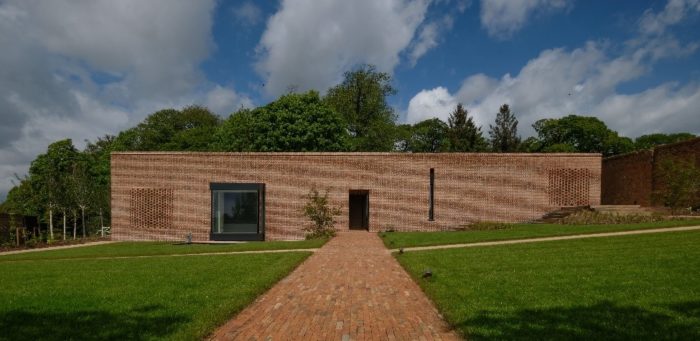
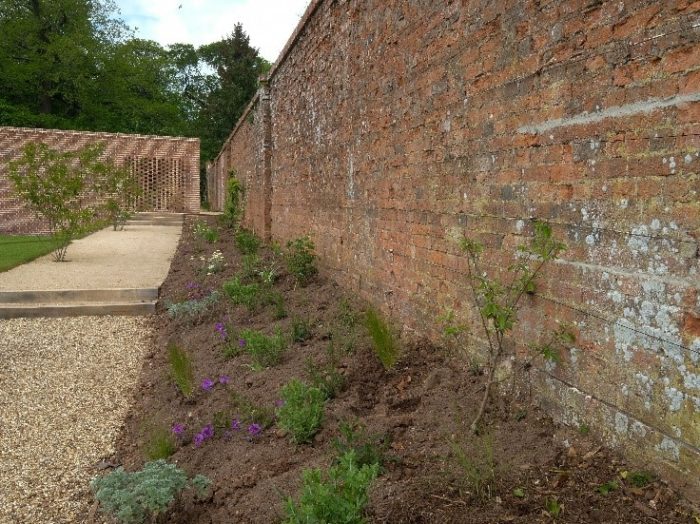
Scope: The construction of a ‘Passivhaus’ in Devon around a 200-year-old wall which surrounded what was the kitchen garden of a classic Georgian country house.
Adhesive requirements: Bonding brick slips onto existing brickwork for restoration purposes. Structural Adhesives Ltd recommended S-2625E which was approved by the contractor.