Category: Blog

  • My Experience at IAA2026

    By Morgan Bates, KTP Associate

    The setting for the 4th International Conference on Industrial Applications of Adhesives in the beautiful town of Guimarães – known as the birthplace of Portugal – felt like the perfect location for my first solo conference experience. Held at the stunning Pousada Mosteiro de Guimarães, the event blended a truly historic venue with the cutting‑edge world of adhesive bonding technologies. It was unlike any conference I’ve attended before.


    There were so many insightful talks that it’s difficult to narrow down specific highlights, but two stood out. It was a real pleasure to hear the plenary from Dr. Andreas Lutz (DuPont) on next‑generation automotive adhesives, and an equally engaging presentation from Dr. Nao Terasaki (AIST, Japan), who explored alternative approaches to circularity in bonded materials with both depth and humour.


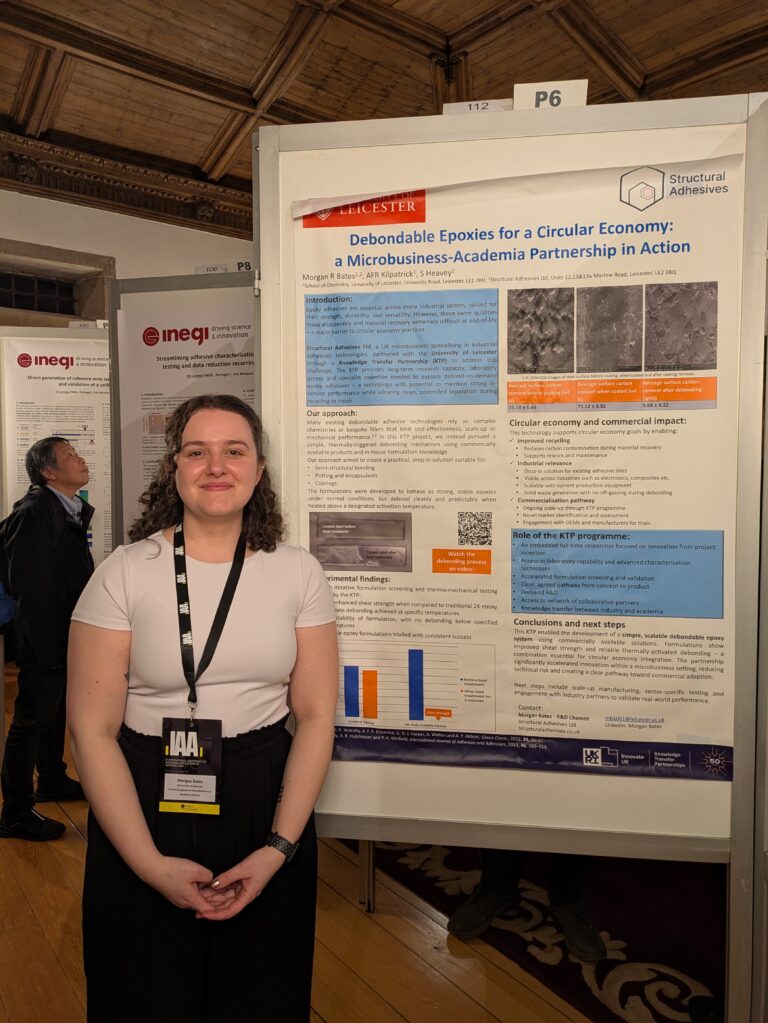
    One of the most valuable aspects of the conference for me was the wealth of networking opportunities and informal discussions baked into the schedule. The poster session, in particular, gave me a chance to properly connect with my peers and showcase my work. My poster was well received by the organisers, who appreciated my enthusiasm and positive energy around the subject — which isn’t hard, considering how passionate I am about this company and about debondable adhesives. It’s rare for a conference to feel genuinely collaborative, but IAA2026 delivered exactly that vibe.


    Most importantly, I had the opportunity to share the great work we’re doing at Structural Adhesives Limited with a wider European audience. For a microbusiness, this kind of visibility is invaluable, and it was a privilege to represent the company at such a respected conference.


    Outside of the conference, I explored Guimarães and quickly understood why it’s considered the cradle of Portuguese civilisation. The old town’s narrow, winding streets, historic buildings and warm atmosphere created the perfect backdrop for such an inspiring event.


    My attendance at IAA2026 reminded me why I love being in this field. The generosity of spirit and the shared desire for collaboration aligned perfectly with the company’s own values, and I’m excited to see how new partnerships and ideas evolve from this experience. I left feeling inspired, informed and energised about the direction our industry is heading.

    And honestly? I can’t wait for IAA2028!

  • Celebrating Our King’s Award for Enterprise in Innovation

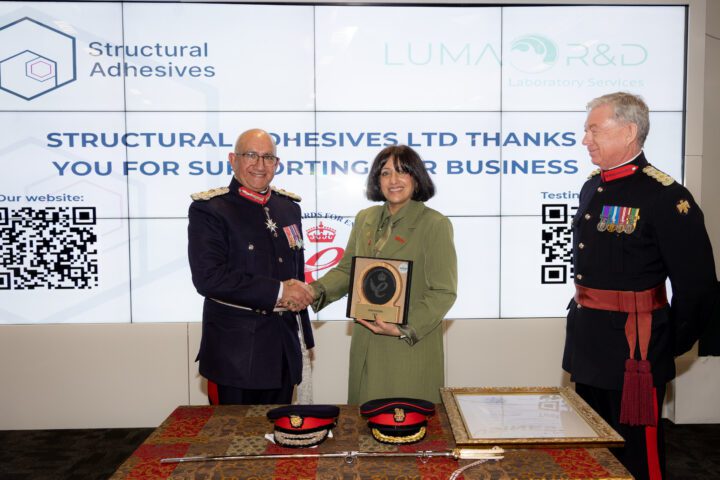
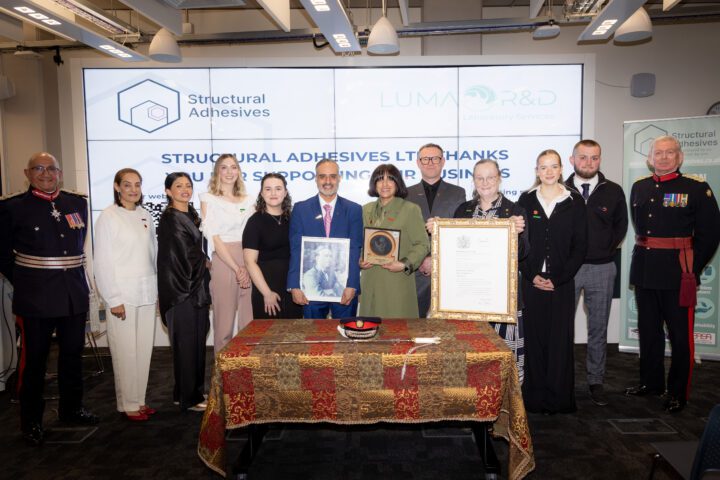
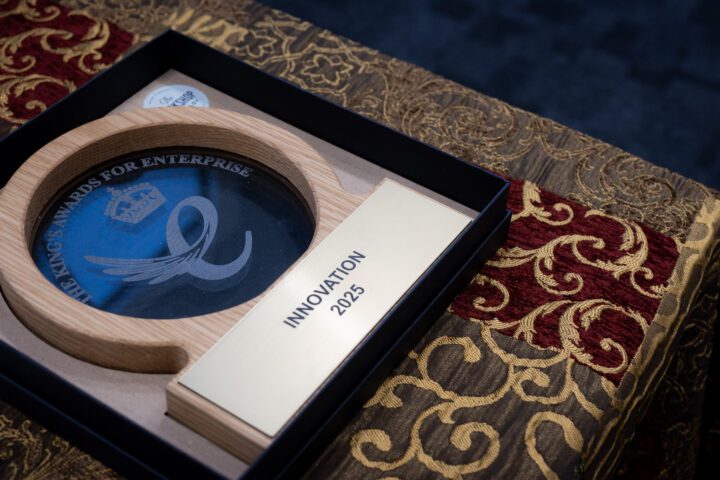
    On 5 February, we had the honour of celebrating one of the most significant milestones in our company’s history: the formal presentation of our King’s Award for Enterprise in Innovation. The ceremony marked the culmination of years of dedicated research, development, and collaboration, and it was a moment that brought our entire team immense pride.

    A Ceremony Led by the Lord‑Lieutenant of Leicestershire

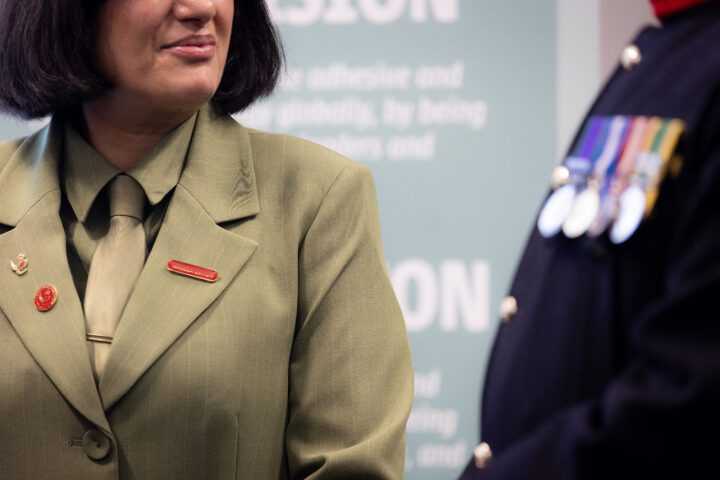
    We were privileged to welcome the LordLieutenant of Leicestershire, Michael Kapur OBE CStJ, and the Vice LordLieutenant, Colonel Richard Hurwood DL, who presented us with our official trophy and Grant of Appointment. Their presence made the occasion especially meaningful, recognising the impact and importance of our work within both industry and the wider community.

    Recognising Innovation in Fire Safety

    The award acknowledges the breakthrough behind our A2 firerated adhesive which is an innovation developed in response to the evolving regulatory landscape following the Grenfell tragedy. The adhesive represents a step forward in safer, more resilient construction and advanced manufacturing, and receiving national recognition for this work reinforces the value of our commitment to solving realworld challenges through adhesion chemistry.

    A Fitting Venue for a Forward‑Looking Team

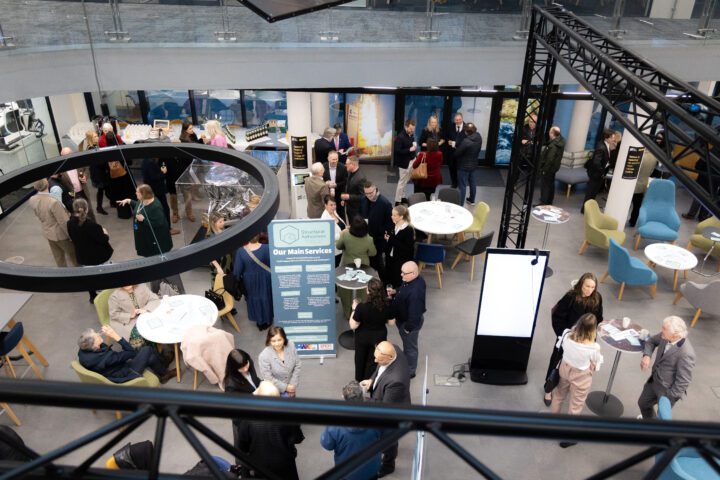
    Hosting the ceremony at Space Park Leicester added an extra layer of significance. As we prepare to expand our work into the space sector, celebrating in a place built on innovation, ambition, and futurefocused research felt entirely fitting. The venue reflects the same spirit that drives our team: curiosity, technical excellence, and a determination to push boundaries.

    A Celebration Shared With Our Community

    We were joined by friends, family, and longstanding supporters who have been part of our journey from the beginning. As a small team, achieving something of this scale is deeply personal. Being able to celebrate together, recognising the hard work, belief, and collaboration that made this possible, was one of the most meaningful parts of the day.

    What This Award Means for Our Future

    This award is a testament to what can be achieved when a team believes in its mission and works collectively toward a shared goal. It also reinforces a principle we hold strongly: size is no barrier to impact. Our achievements are built on collaboration, forwardthinking, and a commitment to innovations that make a genuine difference.

    We extend our sincere thanks to everyone who celebrated with us and to those who have supported us along the way! This milestone marks the beginning of an exciting new chapter, and we’re just getting started.

  • 6 Months at Structural Adhesives as a Placement Student

    By Tegan Harris

    The first week back after Christmas and New Year has felt like a natural moment to pause and take stock, because it also marks six months since I started my placement at Structural Adhesives!

    One of the standout moments of the past few months was the visit in November from Liz Kendall, MP for Leicester West. I had the opportunity to present some of our projects and explain the importance of the work we’re doing. It was especially meaningful to speak about my experience as part of an all‑female technical team, something quite rare in our sector and something we’re all genuinely proud of. Seeing our work showcased to someone outside the industry and watching the team talk so passionately about the impact of innovation in our field, was a powerful reminder of why what we do matters.

    On the technical side, the biggest achievement of my placement so far has been reaching a major turning point in our research and development project. After months of trial and error, recalculations, reformulations, and even a “back to square one” moment, we believe we have finally identified a material that solves the core problems we set out to address. As I mentioned in my three‑month blog, I’m beginning to understand the logic behind each development step and feel more confident in knowing what to try next. We’re now moving into in‑house verification before sending the material for external testing which is a huge step forward, and one that feels incredibly rewarding. Being part of something that could soon become a fully developed product is exactly the kind of experience I hoped this placement would give me.

    This challenge has facilitated not just technical, but personal growth. One of the biggest lessons for me has been learning not to worry when the data doesn’t behave, and to see setbacks as part of the process rather than signs that I’m doing something wrong. Working through the “back to square one” moment taught me how to approach a problem from a new angle and break it into manageable parts. As my dad always told me growing up, “you cannot eat an elephant all at once”, and this experience has emphasised to me how important it is to take things piece by piece and stay rational. It’s the kind of learning curve that I am sure every new starter in R&D goes through, and one I hope will reassure any future placement student who finds themselves staring at a confusing set of results.

    December also brought a completely different kind of opportunity when I attended the East Midlands Chamber AGM. Before the meeting, I helped host our stand at the networking event, and the company had even printed a full banner of an infographic I designed. Seeing my work displayed like that was a proud moment and a small but significant reminder that what I’m doing here has real value. The AGM itself was held in the planetarium at the National Space Centre, which made the whole experience even more memorable. As someone who didn’t grow up in the area, it was my first time there, and it was a pretty spectacular way to be introduced to it.

    Alongside all of that, I’ve had a hand in organising our King’s Award celebration event for February. Taking the lead on the planning has given me a completely new appreciation for how much this recognition means to the company, while also giving me hands‑on experience in coordinating logistics and communication. It’s been a big responsibility, but an incredibly rewarding one. I’ve also been able to explore my creative side by designing the invitations for the event. On top of that, I’ve formatted two additional white papers, now published on our website and LinkedIn page, and I’ve been managing our LinkedIn presence, where we’ve been introducing the team behind the operation.

    It has been incredible learning from so many brilliant minds. I’ve picked up key business and commercial skills from our MD, Angela, and learned the ropes of formulation chemistry under the guidance of our Senior R&D Chemist, Sally. I’ve also been fortunate to work closely with our KTP Associate, Morgan, from the University of Leicester, who is developing debondable adhesives. Watching her project unfold has given me a real appreciation for the value of a knowledge transfer partnership, but even more meaningful has been experiencing her mentorship and unwavering support throughout my time so far.

    Looking back over these six months, I’m grateful for how much I’ve learned and how much responsibility I’ve been trusted with.  I have had so many experiences, both from a Chemistry perspective and further afield, that have shaped my time here so far and made 2025 such a meaningful year. As I look ahead, I want to build on everything I’ve learned so far. On the technical side, I’m hoping to deepen my confidence in researching new avenues and in starting a project entirely from scratch. My first six months have given me a solid understanding of how to navigate the next steps of an open project, but I’d now like to further develop the skills needed to shape those early stages myself. Beyond the lab, I want to continue strengthening my communication, networking, and business skills which is something that has been a real advantage of working for Structural Adhesives as an SME, where you naturally gain exposure to every side of the operation. If the first half of my placement has taught me anything, it’s that growth comes from saying yes to challenges, and I’m genuinely excited to see where the next six months take me.
  • 3 Months at Structural Adhesives as a Placement Student

    By Tegan Harris

    It’s hard to believe it’s already been three months since I joined Structural Adhesives Ltd! I wanted to take a moment to reflect on the goals I set for myself after my first six weeks, and how far things have come.

    One of my initial goals was to deepen my understanding of how products are developed, and I’ve gained a new appreciation for the process. From waiting on samples to formulating and testing, I’ve seen firsthand how much time, patience, and precision goes into creating high performance adhesives. It’s been eye-opening and has pushed me to become even more self-motivated and organised in how I approach my work.

    My second goal was to actively build networking experience. Since then, I’ve attended Cosmic Coffee and Crossing Frontiers at Space Park Leicester. These events helped me see the real value in connecting with others across disciplines. From attending just these two opportunities, I’ve not only grown more confident in relationship-building, but I’ve also sharpened my ability to pitch the company and communicate our technical strengths.

    At Crossing Frontiers, I had the chance to observe how our Managing Director, Angela, effectively approaches networking. She asked direct questions, wasn’t afraid to admit when something wasn’t clear, and made meaningful connections without complicating things. It reminded me that good leadership isn’t about having all the answers, it’s about being curious, confident, and open to learning. These skills I’m trying to carry into my own conversations as I build confidence. Additionally, the event gave us a clearer sense of how our work at Structural Adhesives Ltd fits into the wider space economy, and how organisations like ESA and TWI could support us in that journey. As an intern, it was interesting to see how industries like motorsport, aerospace, and nuclear are actively exploring ways to collaborate with the space sector. It sparked some great conversations around where adhesives come into play.

    On the technical side, I’ve found that the longer I’ve been shadowing Sally and working from her feedback, the more I’ve uncovered about R&D in formulation chemistry. It’s been a rewarding learning curve, especially when it comes to troubleshooting testing failures and figuring out what to try next in a formulation. Sally’s approach has helped me think more critically about the chemical interactions between ingredients, the role of stoichiometry, and how subtle changes in ratios or curing conditions can affect performance. I’m starting to get a feel for the logic behind formulation such as how to read test results, notice patterns, and figure out what might be going wrong. Whether it’s poor adhesion or incomplete cure, I’m learning to ask better questions and think through what to tweak next. It’s helping me grow my problem-solving skills which is key as a chemist.

    So far, being part of an SME has not only sharpened my technical skills but also given me the opportunity to contribute across a range of strategic and creative areas. I’ve worked on presentations for pitches, developed infographics and white papers for current products (watch this space!), and helped produce content for our website. I’ve also supported internal meetings and contributed to award submissions and partnership proposals.

    I’m looking forward to continuing this journey and building on everything I have learned so far; deepening my technical expertise, strengthening my communication skills, and contributing to adhesive innovation!

  • Starting my Placement at Structural Adhesives Ltd

    By Tegan Harris

    My first 6 weeks at Structural Adhesives have been an amazing experience already. I feel like I have learned so much in such a limited time and there’s only more to come.

    Walking in to the office on my first day, I was met with friendly faces and a team of people eager to help me settle in and learn the ropes. I spent my first two weeks shadowing Jade, our research Chemist currently on maternity leave, and spent time researching the science behind epoxies and the world of adhesives. I also quickly got a sense of the company’s values and their eagerness for innovation and teamwork.

    Whilst structural adhesives are a niche, I have quickly come to learn their importance and the almost endless number of industry applications they have. We like to say that “adhesives are no one’s problem until they become the most important problem”. After grasping the basic theories behind adhesives, I went on to learn about the research and development aspect and how projects evolve from day one to a fully developed product.

    One of the standout aspects of my placement so far has been the team culture. Working under Sally has already been so beneficial, she is a wealth of knowledge and has almost 25 years of experience at the company. An advantage of being a member of such a small team, is that you can work so closely with everyone and benefit from shared knowledge every day. Everyone has been so eager to share theirs and I have felt very supported from day one. It has also been extremely empowering being a member of a female-only technical team. In an industry traditionally dominated by men, this experience has already been both empowering and eye-opening.

    I am gaining experience applying knowledge I learned in my first two years of my Chemistry degree at the University of Leicester, combined with new knowledge I have developed in the previous 6 weeks. I have picked up many new skills – such as quality testing with lab equipment I had never used before, interpreting test results in a new setting, and learning the process of research and development. One of the stand out experiences so far has been the opportunity to test hot bonds, which is a feature of our onsite universal tester. As a part of our research, we are required to pull metal bonds at various temperatures and it has been rewarding being able to  observe firsthand how adhesive performance shifts under thermal stress and contribute to real data generation and analysis, rather than just theoretical study. As an additional part of my placement, I’ve successfully completed both manual safety training and first aid training. These sessions have equipped me with essential skills for working safely and responsibly in a laboratory and industrial environment.

    Beyond the technical side, I have also felt a level of personal growth already. Having taken over the technical email address, I have experienced what it is like to network with collaborators, buyers and sellers and already set up a few meetings. It has helped me to establish myself in a professional setting and grow more comfortable communicating in this way. Settling into a new routine and adapting to the pace of a completely new industry has pushed me out of my comfort zone in a way I certainly needed. Alongside this, our MD Angela has offered to provide me with any additional training I’d benefit from such as with presentations and networking.

    Looking ahead to the next six weeks, I’ve set a few goals. Firstly, I’m eager to begin work on a new development project we’ve just opened. My aim is to complete primary research and formulation development, guided by Sally through the early stages. If all goes well, I will be looking at the primary stages of testing and refining specifications we want for the product. It will be a great opportunity to apply what I’ve learned so far, while contributing to a broader innovation effort within the company. My second goal, alongside my technical work, is to actively build networking experience. I’m looking to do this by attending technical talks, participating in company events, or simply initiating more conversations with colleagues. These interactions will help me understand the broader context of the work we do and offer valuable insights into career paths and the processes of collaboration. Additionally, they’ll help me build confidence in discussing technical topics and presenting my ideas which is something I’ve often struggled with in academic settings. While university has equipped me with technical knowledge, this placement offers the chance to engage in real-world conversations and learn how to express my thoughts clearly and professionally.

    I am excited to see what the rest of the placement holds and learn as much as I can during my time here. I can already see the advantages of working for a small, close-knit company and the experience I will gain from this will set me up for my future in a unique way that I likely wouldn’t have had elsewhere.

  • Adhesives for conservation

    Structural Adhesives Ltd are making a big push to improve our sustainability and using the United Nations sustainable development goals as our guide. On first glance, some of the development goals may not seem relevant to a small adhesives company but on further thought, looking deeper into the supply chain it is clear our operations can have an effect on each and every one of them.

    Sustainable development goal 15- life on land sets targets to ensure conservation, restoration, and protection of ecosystems such as forests, wetlands, and mountains. Our raw material and sourcing choices influence this goal. By looking into where raw materials are mined, harvested, or produced we can make educated decisions into what we buy to ensure it is not leading to deforestation or otherwise unsustainable use of ecosystems. Biodiversity loss is one direct effect of land degradation which we are aiming to halt with careful consideration of our raw materials, but there are also other ways we can affect biodiversity.

    Being situated on an industrial estate there is little green space in the immediate area thus there is little opportunity to increase biodiversity onsite. However, anybody who has ever visited our premises will know we more than make up for this with an abundance of house plants, often donated by our green fingered senior chemist. However, there is another, more impactful way in which we are increasing biodiversity and this is through our technology.

    With modern methods of construction traditional nooks and crannies in which birds usually nest and bats roost are not present on newer builds. Campaigners are raising awareness of special boxes that can be installed to provide sanctuary for many of our native wildlife. Structural Adhesives Ltd are proud to support this conservation effort by providing adhesives for the construction of bird and bat boxes. We have also attended forums with urban planners and developers from all over the world to discuss ways of providing housing for the growing population whilst still maintaining space for local wildlife to thrive. We are continually looking for ways in which we can collaborate with organizations working on projects such as these and help provide solutions.

  • Lab expansion pending

    Things have been changing over the last few years at Structural Adhesives Ltd. The emphasis of the business has shifted and we’re focussing more and more on sustainability and providing solutions for the future. Such solutions can only be produced by innovation and development and there are numerous tools that we as chemists use to convert an innovative idea into a tried and tested product. For us these ‘tools’ are primarily in the form of pieces of equipment for testing the properties and performance of development products.

    Last month I was asked by our MD to create a Wishlist of lab equipment. She must have seen my eyes light up, it was like Christmas had come early. I immediately set to scouring the internet for pieces of kit to play with in the manner of a child circling toys in the Argos catalogue. Of course, not everything on my initial list was viable- but this was part of the point of the task. By closely evaluating the list we have identified a number of key pieces of equipment that could make a massive difference to the company and greatly increase our development output.

    Our lab is expanding in both area and capability and we hope, in the not-so-distant future, personnel too.  This will enable us to provide better solutions faster for our customers. It will also broaden the type of development services we can provide and enable us to establish more collaborative projects which is becoming a huge focus for us.

    The architect is due onsite shortly to assess the space for the new lab and then things can really get underway. Keep tuned for further updates on this exciting new venture for Structural Adhesives Ltd.

  • The importance of contextual data

    In primary school, as I embarked on the long road that eventually led to my career in chemistry, one of the first things I recall being taught was about the importance of good scientific practice and avoiding bias. As I progressed through school, university and into industry I have become increasingly aware that completely removing bias, which seemed simple to me at that early age, is actually quite complicated.

    Recently I have been thinking more deeply about bias in science and the wide effect this can have on industry and society. For example, during the current coronavirus situation, it was widely reported by the media that people who had received the Astra-Zeneca vaccine were developing blood clots.  Often the claims were supported by evidence such as ‘X in 100,000 people who had the AstraZeneca vaccine developed a blot clot’. This caused the public to draw conclusions about the safety of the vaccine. Although these conclusions were drawn from data, this data did not represent the whole picture, this is something we might refer to as sampling bias. Once data was published about the rate of blood clot development in unvaccinated people, people who had covid and people who took other commonly used medicines, this gave a different picture and a different conclusion was drawn by many people. This demonstrates the importance of contextual data.

    Another situation has arisen pertaining to the adhesives industry in particular, which again has caused me to think about contextual data and bias. Articles have been published about adhesively bonded brick slips falling from height. These describe several case studies and some are asking for people to provide information about other cases. Again, although there is scientific data within the articles, I find myself drawing similarities between this and the above example of data on coronavirus vaccines. I worry that unless there is contextual data about failures of mechanically fixed brick slips, or any other materials at height, available alongside such articles that any conclusions drawn will be based on a skewed subset of data. The publishers actively asking for people to supply additional data already appear to have drawn the hypothesis that adhesively bonded brick slips are prone to failure. I believe this also leaves the research vulnerable to what is known as confirmation bias, are they are looking for data subjectively and analysing it in such a way as to support a hypothesis they already believe to be true.

    As part of a company that develops and manufactures adhesives, I am acutely aware of the damage such articles could have on the industry. This has even further ingrained in my mind the importance of all scientific articles being vigorously assessed to ensure that what is published is fully representative of the entire picture and that bias is limited to a minimum so that conclusions drawn will be astute and will benefit societal safety and industrial prosperity. With that being said, we would call for the safety of all materials above 2 storey’s in height that have the potential fail to be impartially assessed to the same testing standards.

  • Changing the colour of an A2-s1d0 rated product

    It is usual in the construction industry to match the colour of the adhesive or coating to masonry in applications such as cut and bond bricks and cladding.  In the past this has never been a problem. Here at Structural Adhesives Ltd we have always been happy to supply coloured products or provide colours for customers to tint the products themselves. We even offer a colour matching service for several of our products.

    However, in some cases this is not an option due to strict regulations. For example, for residential buildings, any materials used above 18 m must be A1 or A2-s1d0 fire rated. To obtain this fire rating a number of fire tests must be carried out on the material. Any change to the formulation of the product, even a very small change such as the addition of a minute amount of pigment, would render the testing invalid. Therefore, it is not possible to change the colour of an A2-s1d0 rated product such as our S-2825FRE adhesive, without re-doing all of the fire tests, the cost of which is multiple thousands of pounds.

    When developing S-2825FRE Structural Adhesives Ltd chose the buff colour due to the large number of customers using buff and light-coloured brick slips. We also wanted to make the colours of the part 1 and part 2 of the product obviously different to provide easy identification of thorough mixing. However, if a customer had a real need for an A2-s1d0 adhesive in a different colour, Structural Adhesives Ltd are very confident they would be able to supply this providing the customer were willing to organise and finance the required retesting.

  • Adhesive technology: Where industry and academia meet

    Whilst there are stark differences between the work being carried out at universities and by businesses there is a common theme that will forever link them together; preparation for the future. Both academia and industry are striving for solutions to the real-world problems that have a significant impact on us all. Nonetheless, there is a difference in culture between the two and this leads to different approaches to tackling these issues.

    Academics use public money to push the boundaries of knowledge and investigate new technologies. Often this gives academia the opportunity to work on more ‘blue sky’ research that is not usually available to industry as business directors need a quicker return-on-investment. Also, academics apply a wide variety of methodologies to problem solving and sometimes these have practical obstacles that prevent or impede commercialisation due to high costs, long processing times or low yields etc. This is where we see the benefits of collaboration.

    Bringing together people from academia and industry with different but complimentary expertise and knowledge can lead to much faster product development and development of products better suited to the exact needs of the industry. Academics bring knowledge and results from cutting edge research and industry provides insight into consumer needs/behaviour, practical viability and scale up. Also sharing of facilities and resources can help reduce time and costs for both parties. Furthermore, connections made between university students and business profits everyone. Students gain valuable business experience and business establish a network of future innovators and leaders.  

    Structural Adhesives Ltd have strong relationships with local universities Leicester, Loughborough and Nottingham and have collaborative projects in the pipeline. Structural Adhesives Ltd hope that collaborating with universities will support the company’s green agenda with projects focusing on sustainable adhesives and adhesives to aid with recyclability.