Author: sally

  • Looking forward to a fantastic future

    Structural Adhesives Limited have finished their new Research Lab which is now offering R&D and testing services. Please refer to the following lists of tests we are conducting for clients.

    Testing services for adhesives and other polymeric materials

    PropertyStandardExplanation
    Shear StrengthBS ISO 4587:2003Typical bond strength tests for adhesives.
    Shear strength at elevated temperatureASTM D1002-10:2019Same as the above but can test the adhesives suitability for different service conditions.
    Youngs ModulusBS EN ISO 527-2:2012Essentially a measure of how stiff a material is.
    Poisson Ratiomeasures the deformation of a material parallel and perpendicular to the force.
    Flexural StressBS EN ISO 178:2018Test of the ability of a material to bend before it fails.
    Flexural Strain
    Flexural Modulus
    Peel strength (T-peel)BS EN ISO 11339:2010 Test of the forced required to peel (an adhesive) off.
    Peel strength (180°)BS EN ISO 8510-2:2010 Same as the above but the substrate is pulled at a different angle.
    Pull off/pull out test for construction (using hydrajaws)BS EN 1015-12:2016 Another method of testing strength usually used in the construction industry.

  • S-2300E used for Corium Brick Slip corners

    New Video demonstrating the use of S-2300E to bond Corium Brick Slip Corners


    [wonderplugin_video videotype=”mp4″ mp4=”http://www.structuraladhesives.co.uk/’S-2300E used with Corium Brick Slips.mp4″ videowidth=600 videoheight=400 keepaspectratio=1 videocss=”position:relative;display:block;background-color:#000;overflow:hidden;max-width:100%;margin:0 auto;” playbutton=”http://structuraladhesives.co.uk/wp-content/plugins/wonderplugin-video-embed/engine/playvideo-64-64-0.png”]

  • Technical Update S-585/85A

    The new S-585/85A formulation
    provides significantly improved impact
    resistance over the original product
    shown in Figure 2 (see the attached picture). As can be seen
    from Figure 2 the steel substrate
    broke after 7 impacts where as the
    adhesive remained intact.
    Figure 1 shows a picture of a double
    bond, bonded with the new S-585/85A
    after the impact resistance test.

  • Structural Reactive Acrylic Adhesives for the Modern Age

    Legislation to improve the environment people live in is becoming increasingly common in our modern age. Awareness of the hazards of living with chemicals has grown, and increased the need for safer alternatives to the products that have been used for years.

    Reactive acrylic bonding based on Methyl Methacrylate is an industry standard product that has been used since the 1970’s; but Methyl Methacrylate is highly flammable, extremely smelly, narcotic, sensitising and a respiratory irritant. Yet the industry has found it difficult to move away from this monomer because the adhesives made from it are high in strength and very reactive.

    Many alternatives lack the bond strength or reactivity of Methyl Methacrylate based products. Also adhesive stability can be an issue, reactive systems are complex mixtures and it is always a balance between effectiveness and stability.

    Like other adhesives, the baby has often been thrown out with the bathwater, in the name of health and safety. Well, this is my personal opinion although I do understand current trends are leading towards a safer environment for all.

    We are left with the dilemma “how to make things safer without compromising the products performance?” We at Structural Adhesives Limited are dedicated to improving our products in line with current thinking and customer safety is a major concern for our development team. We developed low odour, safer alternatives in the 1990’s products such as S-605/01A and S-608/88A, and we are continuing out research to the present day with new products coming onto the market in 2019.

  • Epoxy in Space

    News recently reached earth from the international space station of a leak in a Russian Soyuz space craft. A collision with a micrometeorite caused a hole 2 mm in diameter which lead to a drop in pressure inside the space craft. The astronauts aboard the space station were in a position of needing to repair the leak to prevent oxygen concentration in the cabin falling over time. With guidance from the flight controllers in Huston and Moscow and the limited resources available the astronauts successfully sealed the hole. This repair work was carried out using epoxy resin and gauze tape carried in the maintenance kit aboard the space station. The epoxy resin used was a regular epoxy resin sold commercially in stores according to a retired Russian astronaut.

    This news from outside our atmosphere highlights yet another, probably little-known application for epoxy resins. The use of epoxies in space demonstrates their ability to thrive even in harsh environments. Epoxy resin was the solution to repairing the international space station and may very well be the solution to thousands of problems still faced by architects and engineers.

  • A Blog is Born

    A Blog is Born

    One of the many jobs arising from being a Director of an adhesive manufacturing company like Structural Adhesives Ltd, is to be able to translate and communicate the business effectively. I have been given, what can only be described as the loathsome task of doing this via the land of technology, but which bit, eh? ‘Obviously she picked a Blog’, I hear you all say, however not without engaging in what can only be described as a sit-down pros and cons shortlist which I have always retained for projects of a serious nature. However ‘Social Media Platforms’ are serious business and I have actively sought advice about them from my teenage daughters, who are highly knowledgeable in its usage, functionality and very clear to highlight the importance of ones profile photo? Here we go…

    Facebook (it used to be a no-go for those of us who have well and truly left their formative years. However it has become the first port of call for many a person who can remember the terms ‘floppy disk’, and other vintage technologies, and ‘its so you mum!’, I hear my daughter yell (thanks for that) then there’s linkedin the home of the ‘angry’ profile picture, twitter (a never-ending beep of tweets haunts my day from start to finish), snapchat (I am literally a ‘Grandma’ in comparison to its average user age), pinterest (artsy fartsy) tumblr, and a whole assortment of social media tools which seem to enjoy irritating me by leaving the letter ‘e’ off their title.

    So here we are, at the Blog, the choice of millions and me.? I think this is supposed to be the point where I talk about the business but as this is my maiden voyage with my blog, (hopefully I won’t end up like the Titanic), I will leave you with an interesting fact about adhesives……..

    You can make your own glue and you can eat it!? (personally I am not endorsing this, although it would add to your 5 a day!) vegetable glue is a simple recipe: starch and water, (flour or cornflour will do) et voila!

    Now, for lessons in how to formulate, manufacture and supply adhesives, that’s an altogether different story and something that I will try and get to grips with (sorry, I really couldn’t resist!) over the life of this blog….adieu for now

  • Stadium: MK (Denbigh Stadium) Milton Keynes MK1 1ST

    Stadium: MK (Denbigh Stadium) Milton Keynes MK1 1ST

    Principal Contractor: Buckingham Group Contracting
    Specifier: Architect: HOK Sport Architects
    Scope: Construction of football stadium and surrounding retail park. Estimated project cost £56m+
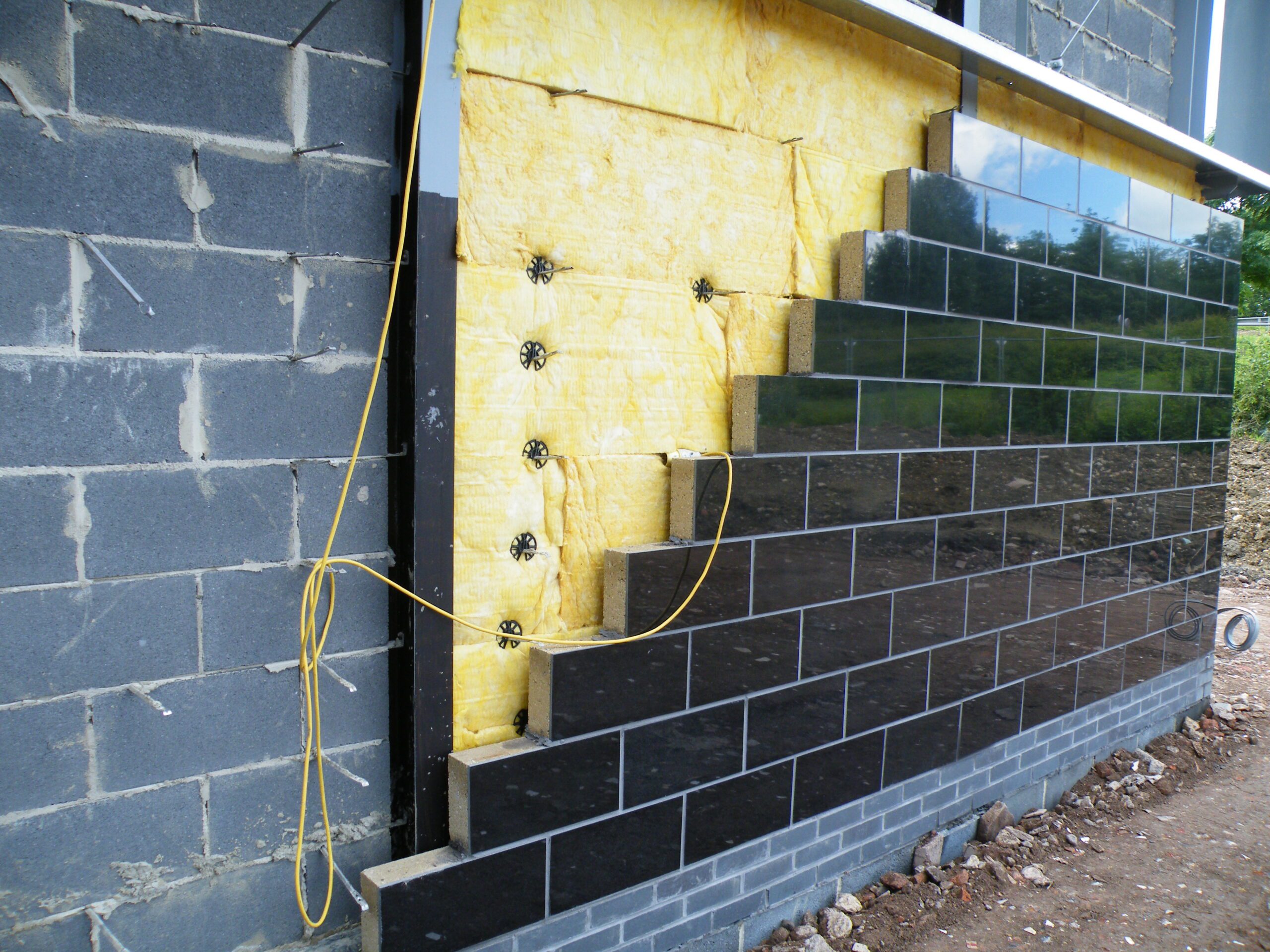
    Adhesive requirements: Block supplier Lignacite were required to bond black polished granite faces to concrete blocks to provide a uniformed theme of high quality facing blocks throughout the expansive retail site. The adhesive needed to be designed for machine extrusion with an exceptionally fast cure time to enable the blocks to loaded within 30 minutes of the bonding taking place. Automated equipment was installed at Lignacite in Brandon Suffolk, which included a dual dispensing machine and a pneumatic turntable and press, as well as a long section of rollers, to deliver the finished blocks to the loading area.
    S-2576E was formulated and tested by CERAM Building Technology, who approved the product for both bond strength and simulated weathering.
    Project completion: Ongoing as of 10/06/2014

  • Park Hill Sheffield S2 5PN

    Park Hill Sheffield S2 5PN

    Principal Contractor: Urban Splash
    Specifier: Hawkins Brown Architects
    Scope: Regeneration of large housing estate. Park Hill is a grade II listed building and is the largest listed building in Europe covering over 17 acres. Renovations estimated at £146m+
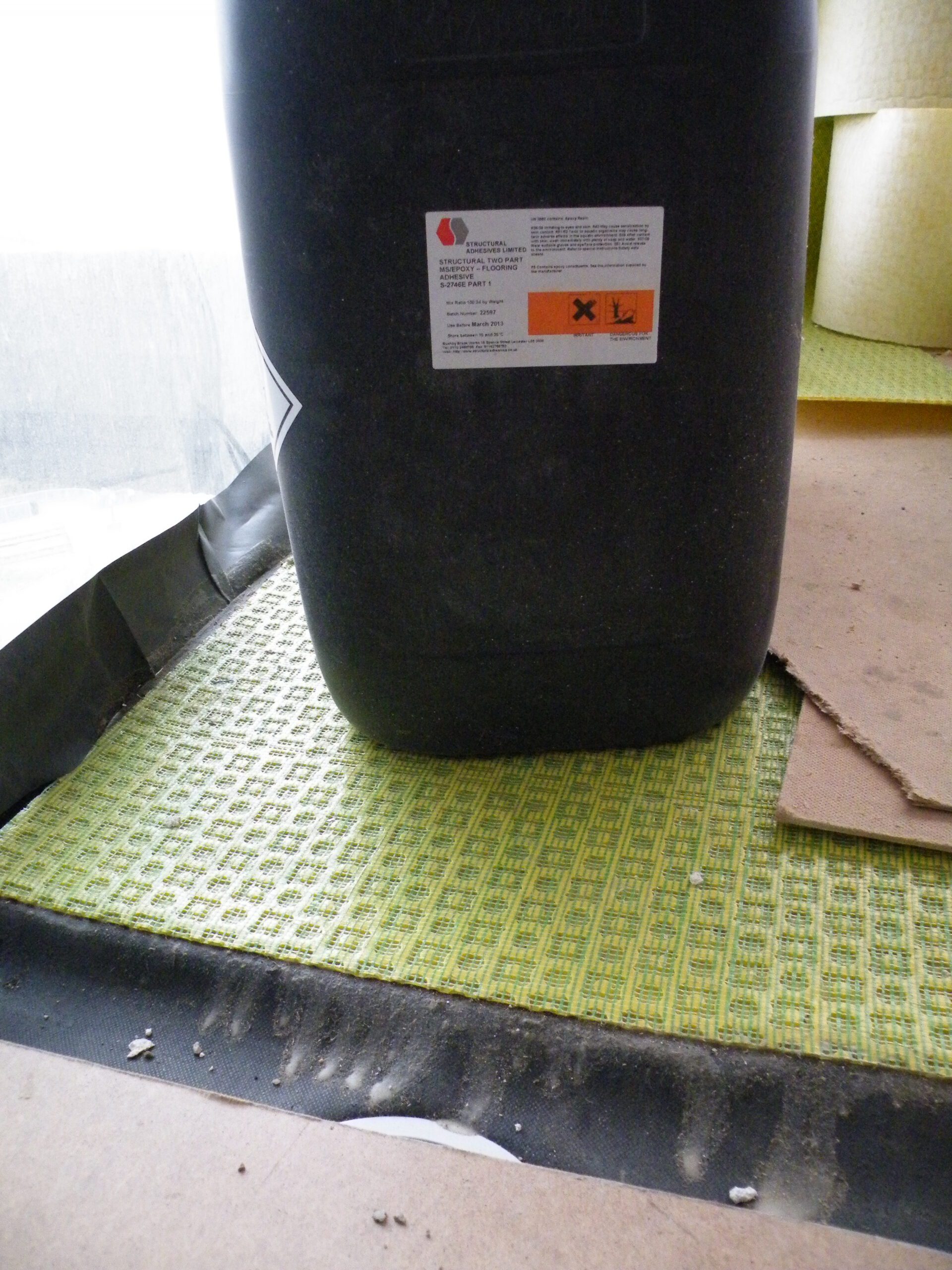
    Adhesive requirements: To enable the tiling of the walkway areas in front of the dwellings, which are exposed to the elements. Structural Adhesives Ltd were asked to design an adhesive which would provide a bond between Dural CS anticrack matting and Radmat Esha bitumen based membrane. The Radmat material is used to tank the flooring with the CS matting providing flexibility to the system thus eliminating cracks to the tiled areas.
    S-2746E was specially designed to bond to the bitumen material present in the tank lining and also the polypropylene material in the anti crack matting. The adhesive needed to not only bond both dissimilar materials but also give a strong bond whilst remaining flexible. To achieve this an epoxy/MS Polymer hybrid material was developed by our technical department and approved by the architect. The product also needed to be low viscosity with a long open time so that the operatives could roller apply it over large areas.
    Project completion: Ongoing as of 17/09/2014

  • Superdry Store, Cult Clothing Leicester Highcross

    Superdry Store, Cult Clothing Leicester Highcross

    Principal Contractor: Mansell Construction

    Specifier: Cult Clothing

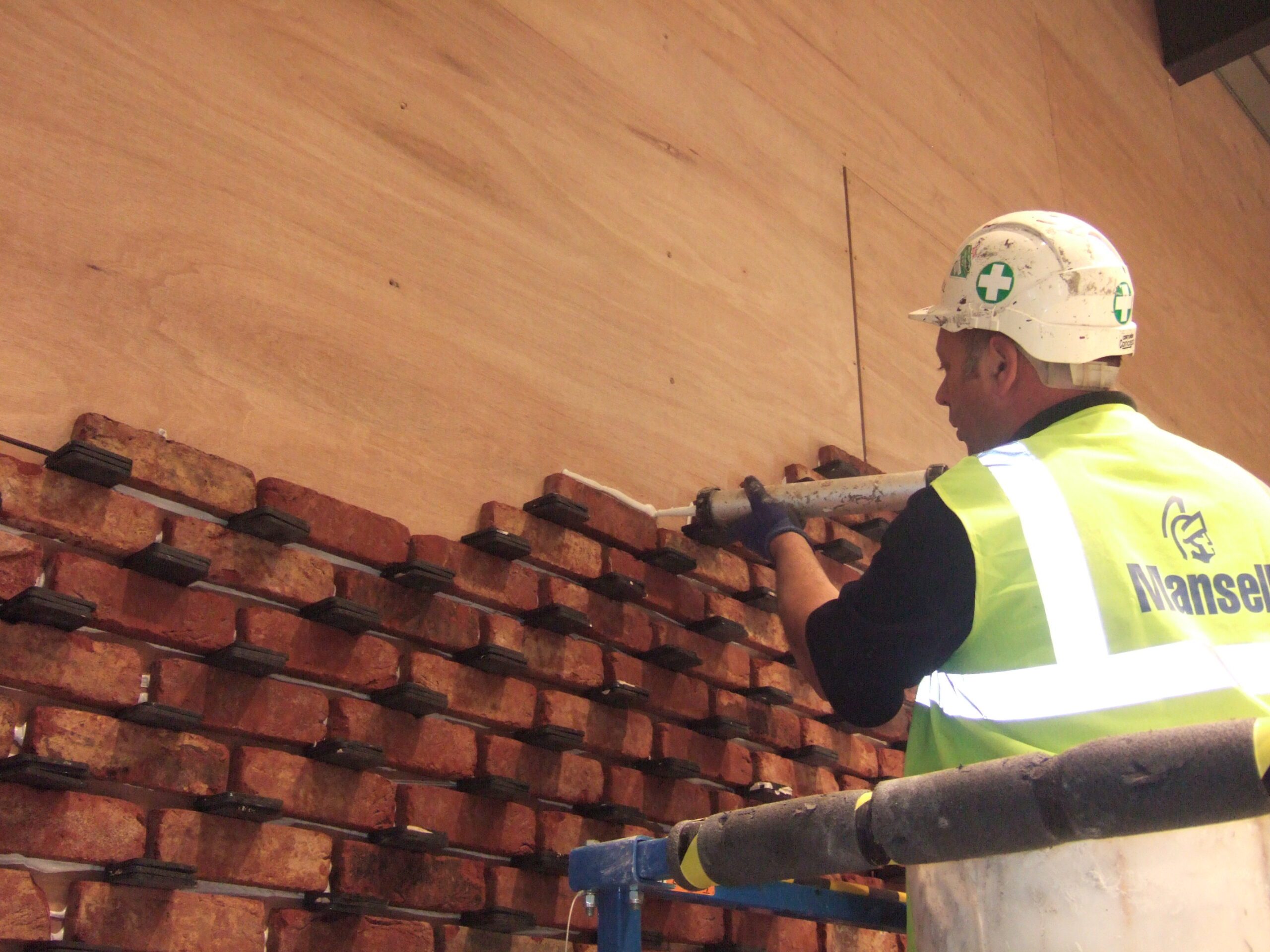
    Scope: To bond brick slips to plywood clad wall sections to give a uniformed brick effect.

    Adhesive requirements: Our S-732U VHG was specified following testing to bond the brick slips to the plywood to achieve the aesthetic requirements of the design/architect team.

    S-732U VHG (very high grab) has recently been approved by Lucideon Laboratories in a brick slip to GRP scenario.

    Project completion: Superdry Store opened in early 2009.